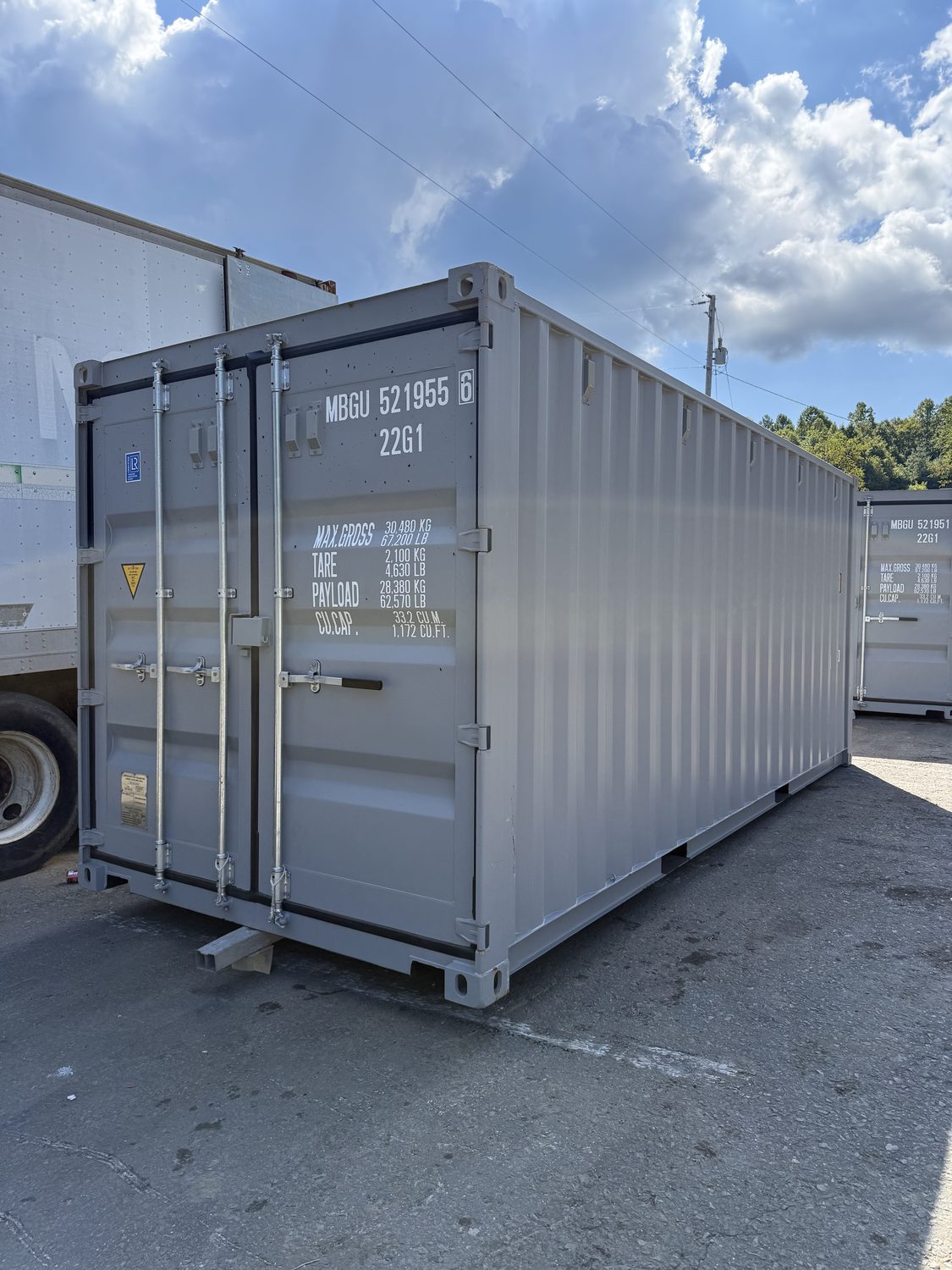
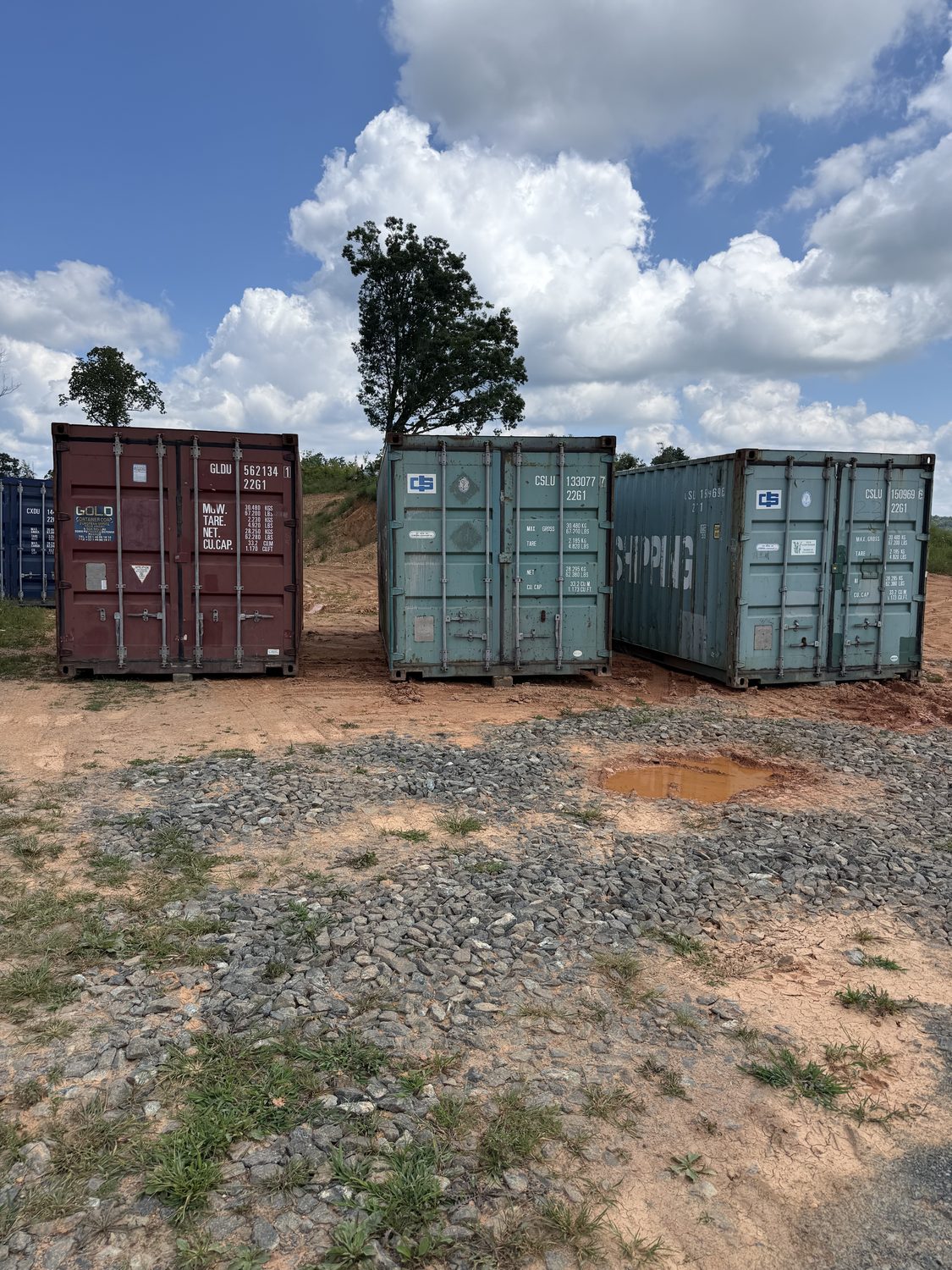
In Floyd County, USDA's 2022 Census of Agriculture found half of the 668 farms at 71 acres or smaller. On a small holding where a shipping container is the one outbuilding on the place, it has to hold the garden tools, the feed and the market gear, sit where the work starts, and be sized for the day the operation grows: about 160 square feet in a 20-ft, about 320 in a 40-ft.
USDA's 2022 Census of Agriculture put the median Floyd County farm at 71 acres, which means half of the county's 668 census farms were that size or smaller. The same 2022 census counted 252 of those farms under 50 acres, about three in eight of the total.
Those numbers only reach so far. USDA's census definition counts a place as a farm when it "produced and sold, or normally would have sold" a set minimum value of agricultural products during the census year, so a homestead below that line on both counts sits outside every census figure on this page. What the figures do show is that small places are an ordinary part of Floyd County farming, not an exception to it.
On a small place, storage may come down to one building rather than a barn, a shed and a shop. When a container is the one outbuilding on your place, it stops being overflow and becomes the dry room for the whole operation: tools, supplies, feed, the things for market and the things for the garden. That changes how you should pick it and where you should put it. For the rest of what we deliver up to Floyd, VA and the county around it, the town page has it all in one place.
Floyd County farming is mixed. In the 2022 Census of Agriculture, Floyd County ranked 12th in Virginia in sales of nursery, greenhouse, floriculture and sod, and 12th again in fruits, tree nuts and berries, among the counties whose rank the census could display. By acres, the same 2022 census put forage, meaning hay and haylage, far ahead of any other crop in the county, and its livestock count from December 31, 2022 took in layers, sheep, goats and horses as well as cattle. The 2022 census also found that 10 percent of Floyd County farms sold directly to consumers and 96 percent were family farms.
On a place that does a little of several of those things, each one brings its own gear, and the gear does not mix well. Folding tables and crates for a market stand want to stay clean. Pots, flats and bagged potting mix want to stay dry. Fencing tools and wire want a wall of their own. A single container organized in zones, with shelving down one side and open floor at the doors, can keep them apart. Our shop builds shelving and racking into containers, quoted in writing with each piece itemized.
Feed for a small flock has its own considerations, and our answer on storing feed in a container covers them. For farm storage beyond the one-building case, the farm and agriculture storage page takes in the wider picture.
On a place built around a barn, storage goes with the barn. On a place where the container is the one outbuilding, the better spot is usually near the house and the garden, where you will open it several times a day. A box you have to walk a field to reach tends to become a box you stop using, and the tools start living on the porch again.
The truck still has a say. A tilt-bed needs about 65 feet of straight pull-in to set a 20-ft and about 95 feet for a 40-ft, so the ideal spot by the garden has to be one the truck can reach in a straight line. Once it is down, the container is set on blocks and leveled, and it comes with its welded lockbox in place, as every box we sell or rent does. For a place that does have a barn, our answer on where a container should go on a farm works through siting around one.
Placement rules in Floyd County come in two versions. Floyd County publishes no zoning ordinance. Inside the Town of Floyd, the town's posted zoning ordinance has its own section on storage containers, written around temporary placement on any lot, farm lots included, so a permanent outbuilding inside town limits is a question for the town before it is a question for us, and our Floyd County permits page has the town's rule, its office and the call to make first.
For a single outbuilding on a small holding, a 20-ft is the usual starting point. It gives about 160 square feet of floor, costs $3,200 used and cargo-worthy with delivery and leveling included, and needs the shorter truck approach. Laid out with care, that is often room enough for tools, supplies, market gear and feed for a few animals.
A 40-ft, around $4,900 delivered, gives about 320 square feet, and a few needs push a place toward it. A tractor, or any implement that has to go inside, eats floor quickly; our answer on storing a tractor in a container covers the fit. Two uses that should stay well apart, such as market goods and a workbench, are easier in a long box with a zone at each end. And a place that already expects to add animals or a second market crop may be better served by buying the room once.
Our 20-ft vs 40-ft guide sets the two sizes side by side. Renting is also an option while you find out how you use the space: $165 a month for a 20-ft and $235 a month for a 40-ft, month to month, with ownership becoming the cheaper choice at about 18 to 20 months.
Tell us what the place raises, where the house and garden sit, and how the truck gets in. You get a real quote the same day, with delivery free at about 35 road miles.
Same-day reply. We'll send a real number, a real delivery window, and any photos we need to confirm fit.
You'll hear back from us today (or first thing tomorrow if it's late). For anything urgent, call (276) 237-6144.