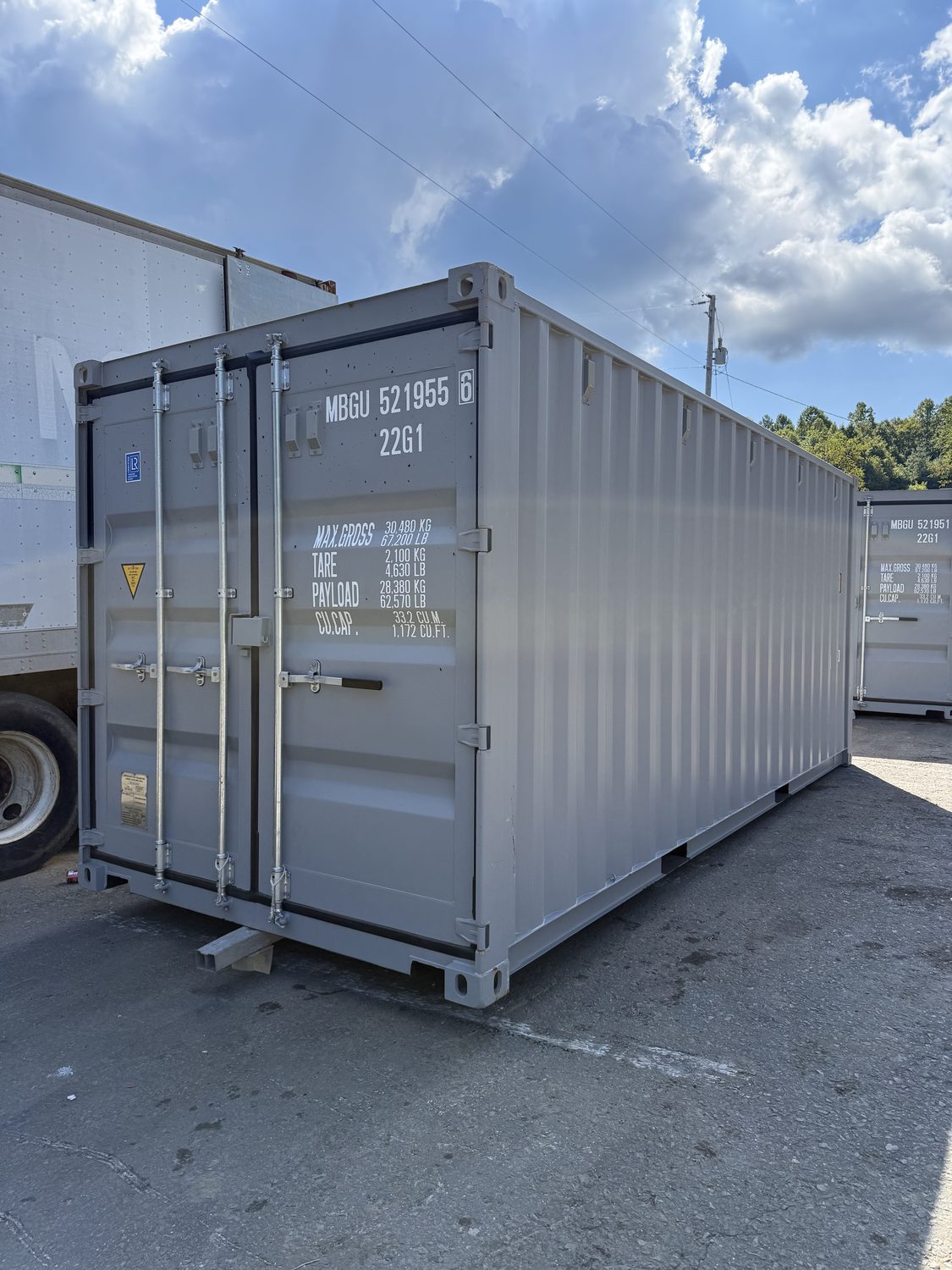
Which side of the Hillsville town line your parcel falls on decides who has a say about the container. Inside the corporate limits the town runs zoning of its own. Outside them, no county ordinance applies. A mailing address does not settle it.
Getting a container to Hillsville is the easy half. You are about 8 road miles from the Woodlawn yard, well inside the 75 road miles where delivery and leveling are free. The harder question is who has a say, and where on the parcel the box can sit.
That first one turns on a line on a map. Carroll County has adopted no countywide zoning ordinance, which our Carroll County permit page covers in full. The Town of Hillsville is incorporated and runs zoning of its own inside its limits, so two neighbors sharing a Hillsville mailing address can be under different rulebooks.
We deliver and level. We do not pull permits, file applications, or know what district a parcel is in. Delivery day in Hillsville covers the truck.
The codified town code carries a full zoning chapter: zoning districts and their purposes, use regulations, conditional use provisions, conditional zoning, site plan review and official zoning maps. Inside the limits, that chapter governs where a container may sit.
The town staffs the office that runs it. The Official Zoning Map is kept in the Zoning Administrator's office, with a copy on file for inspection in the Town Manager's office, and once Town Council approves a conditional use permit the Zoning Administrator issues the zoning permit. The town publishes its own building permit application too.
Virginia's building code also treats a locked storage container differently from one people occupy, and that citation is on our Virginia permits page.
A Hillsville mailing address settles nothing. Postal boundaries and corporate limits are drawn for different reasons, and plenty of land carrying a 24343 address is out in unincorporated Carroll County. The county's own offices even sit on Pine Street, inside the town.
Two ways to ask. Call the town with the parcel address, or the tax map number, and ask whether it falls inside the corporate limits. Then look at what you are billed for, since a property inside generally pays town taxes. Neither is a call we can make for you.
Work down a list so one call does it:
If the answer to the first is no, you are in unincorporated Carroll County, and that picture is on the Carroll County permit page. Not sure who to call? Start here.
A setback is a minimum distance a structure keeps from a fixed reference: property lines, the road right of way, sometimes a drain field. It is measured, not eyeballed, and the number is district specific, which is why we publish none. Whether it reaches a container is the accessory structure question.
Under that sits a layer no government office checks for you, on either side of the line:
Pull your deed and your plat before you choose a spot.
Water is the first filter. Pick ground that sheds it rather than collecting it, and stay out of the low corner and the runoff path, because a box in standing water rusts at the corners and its doors start to bind. Compacted gravel is the friend; a gravel pad and our foundation guide cover the options, and a real grade is worth a phone call.
Doors are the second. They sit on one end, open wide, and need clear room in front, and which way they face is your call, worth settling before the truck comes.
Reach is the third. A 20-ft container wants roughly 65 feet of straight pull-in and a 40-ft roughly 95, counted from the spot where it will end up, with room behind that for the truck to back in. The path has to be clear overhead too, past power drops, cable lines and limbs. The rest of delivery day is on the delivery page and in our preparation guide.
Our end does not change. We seat the box on foundation blocks and bring it level there, which is the whole of what blocking and leveling means, and it keeps the doors swinging true. The welded lockbox is on it already. If your package has power in it, our shop stops at the rough-in. The final hookup and the inspection belong to a licensed electrician in your jurisdiction, and we file no permit for anyone.
So the sequence runs: settle the town limits question, call whichever office governs the parcel, pull the deed, pick ground that sheds water and holds a truck, then call (276) 237-6144.
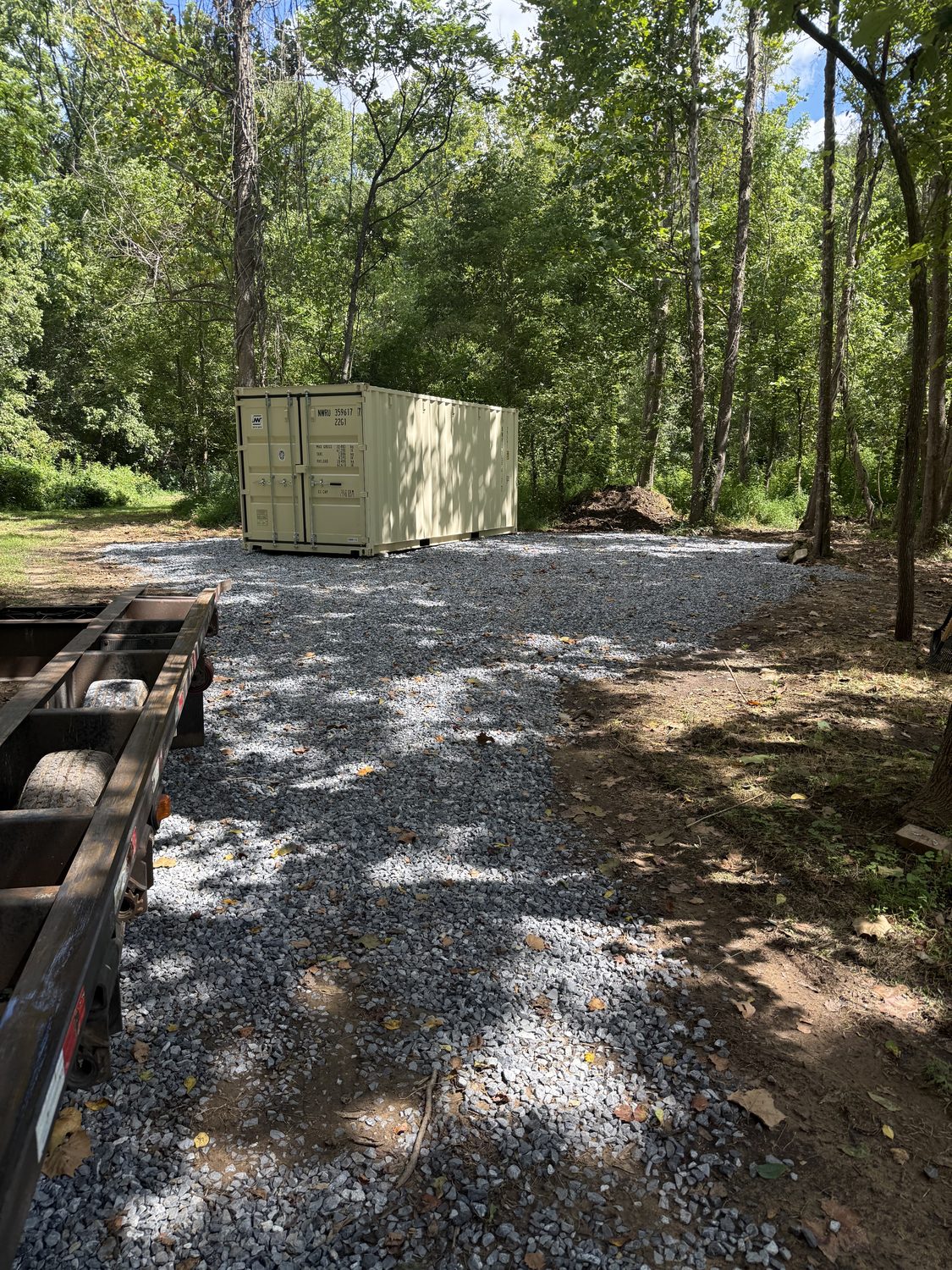
Send the size, the address and a photo or two of the approach, and we will come back with a written quote and a straight read on the spot you picked.
Same-day reply. We'll send a real number, a real delivery window, and any photos we need to confirm fit.
You'll hear back from us today (or first thing tomorrow if it's late). For anything urgent, call (276) 237-6144.